
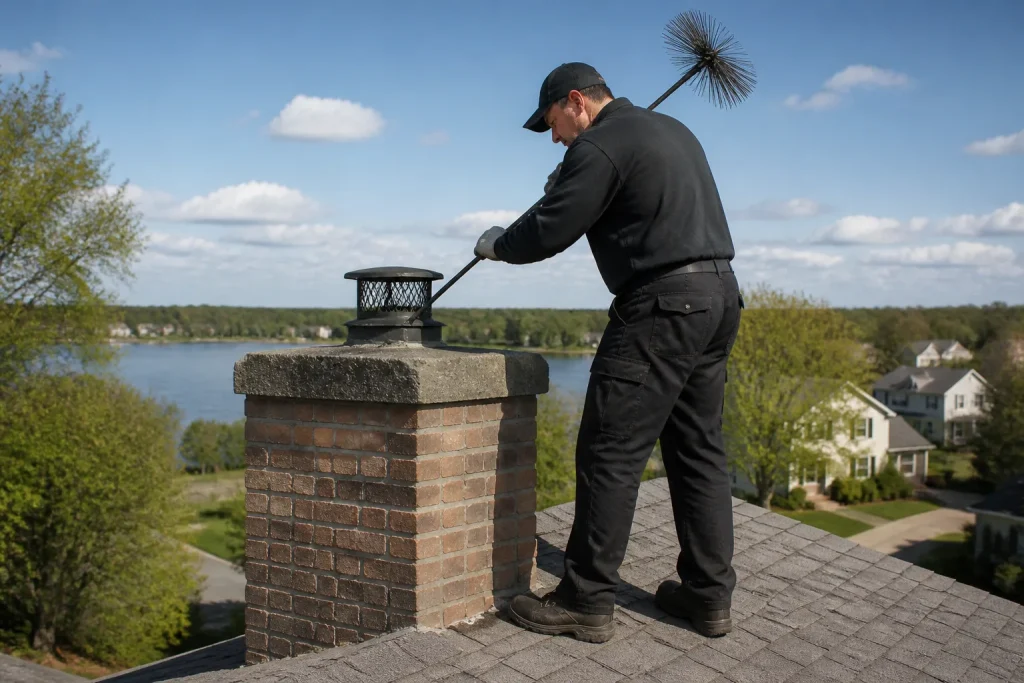
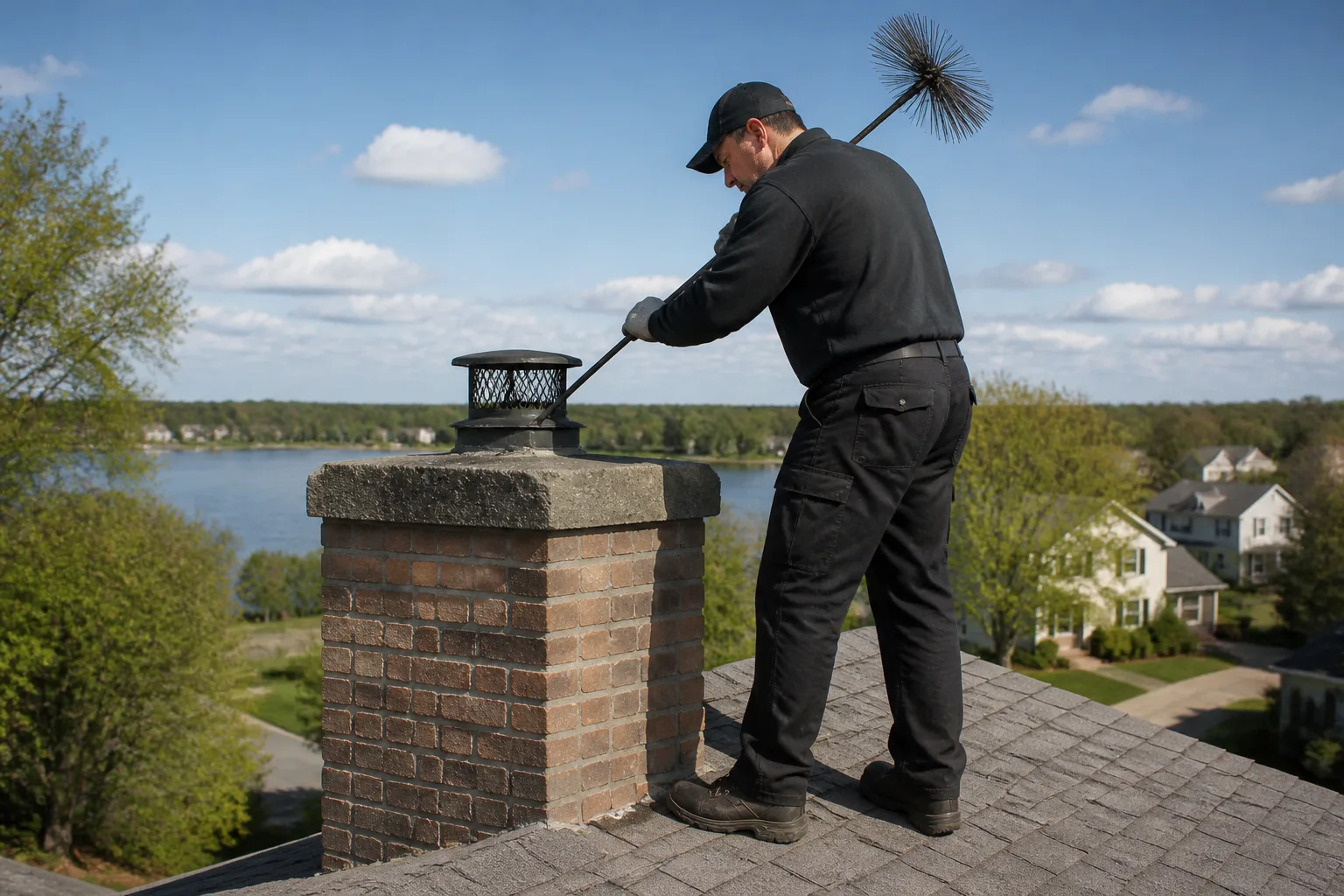
Famco Chimney Sweep in Lakewood: A Homeowner’s Guide
The cap sitting on top of your chimney is doing four jobs at once: blocking rain, keeping animals out, arresting sparks, and managing draft. A cheap substitute fails at least two of those within a couple of Lakewood summers, and most homeowners never learn which two until a sweep finds rust flakes in the firebox. Famco makes the caps, termination covers, and venting components that hold up here. This guide explains where those parts actually sit in your system and why installation matters as much as the brand on the box. If you’d rather not climb up there yourself, call (888) 839-3160 and we’ll take a look.
What does Famco actually make for a chimney system?
Famco manufactures components that live at the top and the termination end of a chimney system, plus venting hardware that connects them. The company doesn’t make liners or fireboxes; that’s DuraFlex and HeatShield territory. Understanding the split matters, because a Lakewood homeowner shopping for a “Famco chimney cap” needs to know what the brand does and doesn’t cover.
The product categories you’ll encounter most often:
- Termination caps. The lid on a masonry or prefab chimney. Screens, spark arrestors, and weather bands are usually built in. This is the part most Lakewood homes end up replacing first.
- Draft inducers and venting components. Used where a flue needs help overcoming a short stack, an offset, or a tight termination. Common on gas appliances and some wood-burning setups where the original installer undersized the run.
- Vent caps and rain shields. Smaller pieces for B-vent and direct-vent terminations, often on gas fireplaces and furnace flues.
Each of these protects something specific. A termination cap keeps water out of the flue tile and keeps squirrels from nesting in the smoke chamber. A draft inducer corrects a pressure problem that no amount of sweeping will fix. A rain shield on a B-vent stops water tracking back into the appliance. Famco sells all three, and a proper Lakewood sweep should be able to tell you which one your chimney actually needs before recommending a purchase. We don’t just clean it; we assess the whole system top to bottom.
Why does cap sizing relative to flue tile matter for draft, not just weather?
A cap sized wrong for the flue tile dimension will choke the draft. That’s the part most homeowners miss. The cap isn’t just a roof for the flue; it’s the last pressure control point in the system. If the cap’s opening is too tight against the flue tile, smoke rolls back into the room on a cold start. If it’s too loose, rain and downdrafts find a way in.
What sizing actually involves:
- Measuring the outside dimensions of the flue tile (or the chase top on a prefab), not the brick.
- Matching the cap’s inner opening to that measurement so the screen sits clear of the tile without a gap.
- Checking the height of the screen and the spark arrestor, since a tall cap on a short stack can change how the flue draws.
- Confirming the cap sits level and the fasteners bite into solid material, not mortar that’s already crumbling.
In our experience, the draft complaint that brings a Lakewood homeowner to the phone is often a cap problem, not a chimney problem. Someone installed an off-the-shelf universal cap over a flue tile that didn’t match, the screen is half clogged with creosote and debris, and now every fire smokes into the room. A correct Famco cap sized to the actual tile fixes it. A wrong one makes it worse. That’s the difference between a specialist and a generalist with a ladder.
Why does improper termination cover installation cause warranty and code problems in Lakewood?
Improper installation voids warranties. That’s the short answer, and it applies whether the cap is Famco, Copperfield, or any other professional-grade brand. Manufacturers write installation instructions for a reason, and when the fasteners, sealant, or clearances aren’t followed, the warranty doesn’t apply even if the failure is the manufacturer’s fault.
Where we see problems in Lakewood:
- Sealant applied over the wrong surface. Caulk won’t bond to a dirty or wet chase top, so it fails within a season and water gets behind the cap.
- Fasteners into mortar instead of solid masonry. A cap screwed into a loose mortar joint will lift in a strong wind. Then it’s a projectile, not a cap.
- Clearances ignored on prefab systems. Prefab chimneys have listed clearances to combustibles. A termination cover that changes those clearances isn’t code-compliant, and no inspector will sign off on it.
- Draft inducer or vent component installed without matching the appliance’s listing. Gas appliance venting has to match the manufacturer’s specified components. Substituting a generic part is a code issue, not a stylistic choice.
Most cities require a permit for structural chimney work, and many require inspection of gas venting changes. Ask your city’s building department before any cap or vent replacement that goes beyond a like-for-like swap. If you’re in Lakewood and aren’t sure whether your last cap install was done right, that’s exactly what our chimney inspection is for. We look at how the existing components were installed, not just whether they’re present.
Galvanized, aluminum, or stainless: how do Famco products hold up in Texas heat and humidity?
Stainless lasts longest in North Texas heat and humidity cycles, aluminum holds up well for mid-range work, and galvanized is the budget option with the shortest life. That’s the honest hierarchy. It’s not marketing. It’s what the metal does when it sits in the sun, gets rained on, and dries out, repeatedly, over years.
Here’s the comparison in plain terms:
| Material | Typical lifespan in DFW conditions | Best suited for |
|---|---|---|
| Galvanized steel | Shortest of the three; coating degrades and rust shows through | Budget swaps where the chimney is being sold or the cap is temporary |
| Aluminum | Mid-range; handles humidity well but can dent or bend under hail | Most standard masonry cap replacements on Lakewood homes |
| Stainless steel | Longest; resists rust and holds finish under UV and heat | Prefab systems, long-term homes, and any cap exposed to full afternoon sun |
The DFW climate is brutal on exterior metal in a specific way. Summer surface temps on a dark cap sitting in the sun get hot enough that cheap coatings break down faster than they would in a cooler market. Then late-summer thunderstorms and winter humidity cycles do the rest. We install Famco, Copperfield, and Olympia Chimney components because those brands build for this. A galvanized cap isn’t “wrong” – it’s just a shorter life. The question is whether you want to redo the job in a few years or not think about it again for much longer.
What does a professional look for before recommending repair or replacement?
A professional inspects the cap, the flue tile, the screen, and the venting termination before recommending any purchase. That’s the answer to “should I replace or repair?” The inspection decides, not the sales pitch. In Lakewood, where homes range from mid-century ranches to newer builds, the cap age and the flue condition don’t always line up, and the right call depends on what’s actually there.
What we check, roughly in order:
- Cap integrity. Rust-through, bent screens, loose fasteners, failed sealant. A cap with light surface rust and a solid screen often just needs cleaning and resealing.
- Screen condition. Clogged or torn screens mean animals and sparks are getting where they shouldn’t. Sometimes the screen is replaceable; sometimes the cap isn’t.
- Fit to the flue tile. If the current cap leaves a gap or sits too tight, replacement is usually the honest recommendation.
- Chase top or crown condition under the cap. A new cap on a cracked crown is wasted money. Crown repair comes first. That’s why we run chimney cap & crown as a single service rather than two separate jobs.
- Venting components. Draft inducers, B-vent caps, and termination hardware get checked against the appliance listing and for corrosion or separation.
If the components are sound and just dirty, we say so. If the crown needs repair before a cap makes sense, we say that too. Nothing gets recommended without camera evidence you can see for yourself, and there are plenty of times the honest answer is “this can safely wait until next season.”
When to call a pro
Call a professional if you’re not comfortable on a roof, if the cap is over a steep pitch, or if there’s any question about draft, venting, or how the last install was done. We won’t walk you through climbing up to inspect the cap yourself. Roof work and gas venting are both places where a mistake is genuinely dangerous, and a chimney cap install that looks fine from the ground can still have failed fasteners or a voided warranty. If a fireplace is smoking back into the room, stop using it until someone qualified looks at it. Carbon monoxide from a blocked or poorly vented flue is the risk that makes this worth taking seriously.
Related services in Lakewood: our chimney sweep includes a camera inspection and photo report, and if the firebox or damper is part of the problem, we handle fireplace repair under the same roof as the cap work. One provider from the firebox to the cap means nothing gets handed off.
The Bottom Line
Famco makes the caps, termination covers, and venting components at the top of your chimney, and the quality of what’s up there determines what happens all the way down the flue. Sizing matters for draft, not just weather. Material choice determines how many Lakewood summers the cap survives. Installation determines whether the warranty holds. A chimney-only specialist looks at all three before recommending anything, and does the repair work rather than handing it off.
- Famco covers termination caps, draft inducers, and venting components.
- Cap fit to flue tile affects draft, so it’s not a universal-fit purchase.
- Stainless outlasts aluminum, which outlasts galvanized, in DFW heat and humidity.
- Improper installation voids warranties and can violate code on prefab and gas venting.
- Repair vs. replace is an inspection call, not a sales call.
Our technicians have up to 12 years of experience with chimney systems, and we work with professional-grade brands including Famco, DuraFlex, HeatShield, Gelco, Olympia Chimney, and Copperfield. Every job starts with a free estimate and a flat price agreed before we book. If you’re in Lakewood and need help, Lakewood Chimney Sweep Pros offers free estimates. Call (888) 839-3160. We answer 24/7, with fast dispatch from 7am to 7pm, Sunday through Friday.
Frequently Asked Questions
Most Famco cap replacements in Lakewood run in the mid-hundreds installed, with stainless at the higher end and galvanized at the lower end. The written estimate sets the final price, and it depends on the flue tile dimensions, the cap model, and whether crown repair is needed first. We give a flat price before we book the job. Call (888) 839-3160 for an exact quote – estimates are free.
A hardware store cap can work if it’s correctly sized to your flue tile and properly fastened, but universal caps often aren’t. The failure modes are draft problems from a bad fit, fasteners pulling out of mortar, and sealant failing within a season. Famco and Copperfield caps are sized to actual tile dimensions, which is where the difference shows up. If your last cap came from a big-box shelf and the fireplace smokes, that’s worth inspecting. Call (888) 839-3160 to book an inspection.
A chimney cap should be checked at every annual sweep and replaced when rust-through, screen damage, or fastener failure shows up. In Lakewood’s heat and humidity, galvanized caps often need replacement sooner than aluminum or stainless. Aluminum and stainless typically hold up considerably longer, but the inspection is what decides. Call (888) 839-3160 to schedule a sweep and cap check.
A draft inducer can fix a smoking fireplace when the cause is insufficient draft from a short stack, an offset, or a termination that’s too tight, but it won’t fix a blocked flue or a damaged cap screen. The inspection has to identify the actual cause before any component gets recommended. We won’t sell a draft inducer for a problem it can’t solve. Call (888) 839-3160 for a diagnostic inspection – estimates are free.
Written by the team at Lakewood Chimney Sweep Pros.
Need Chimney Cleaning Help?
Call Lakewood Chimney Sweep Pros - the local pro we connect you with is licensed and insured, here with fast help in Lakewood.
(888) 839-3160